Orthodox
Sunday morning I was nursing a slight hangover from the few light beers I had with friends the night before. Starting to notice that the headaches linger longer the deeper into my 20s I go. My place was quiet. My roommate out of town, my girl out of town. Nothing to do. I contemplated staying in bed, maybe reading a book, but I knew better. In minutes I’d likely be scrolling X instead to recuperate the lost dopamine. I decided the better choice was vitamin D. I went for a walk to get some sun and move the body. It was around 9 and I heard church bells up the street. I’ve walked by the Russian Orthodox Church next to McCarren Park many times, but never felt the pull to enter. For some unexplained reason, Sunday was the day I would see the inside. I found myself taking a seat alone in the back as the service already began.
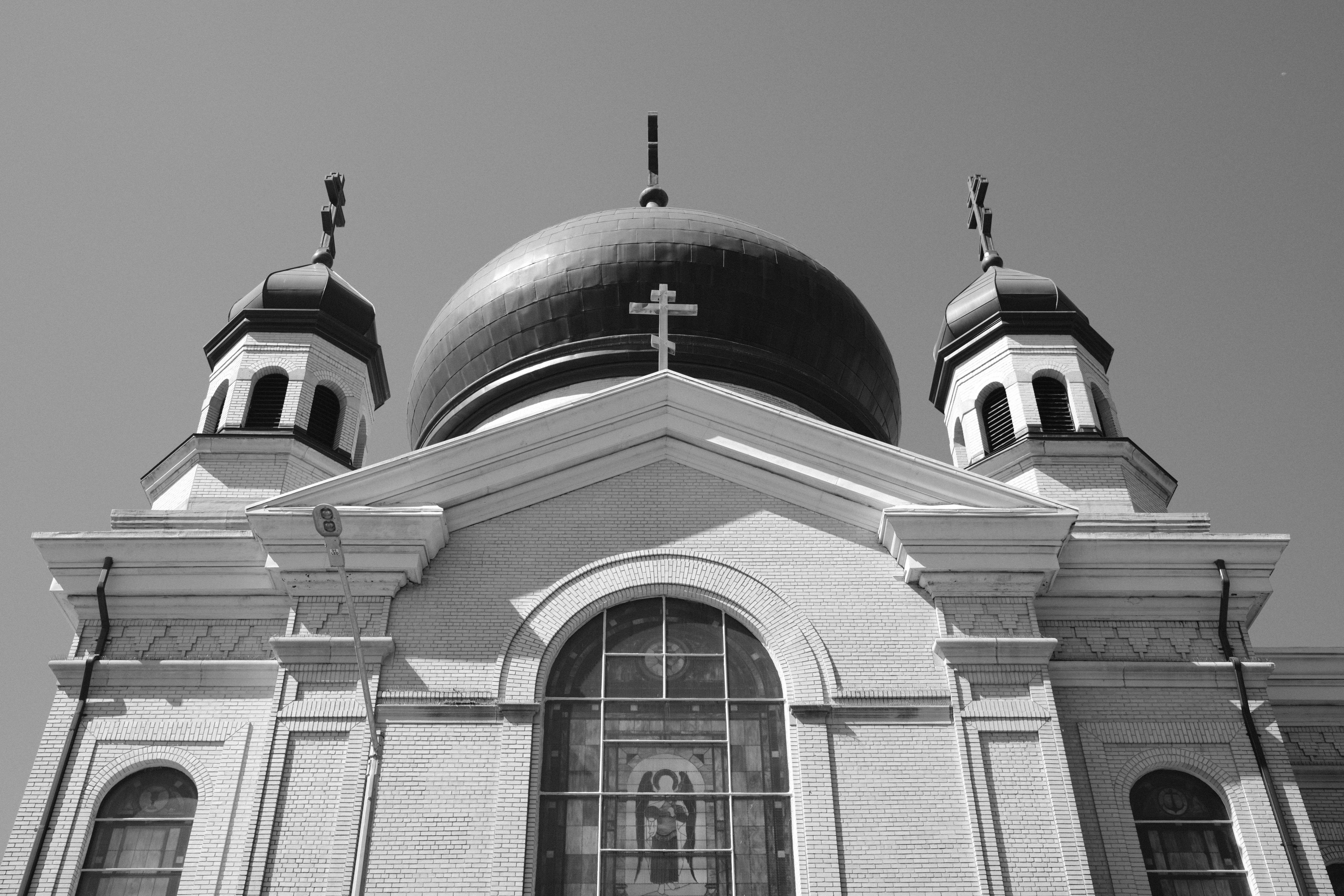
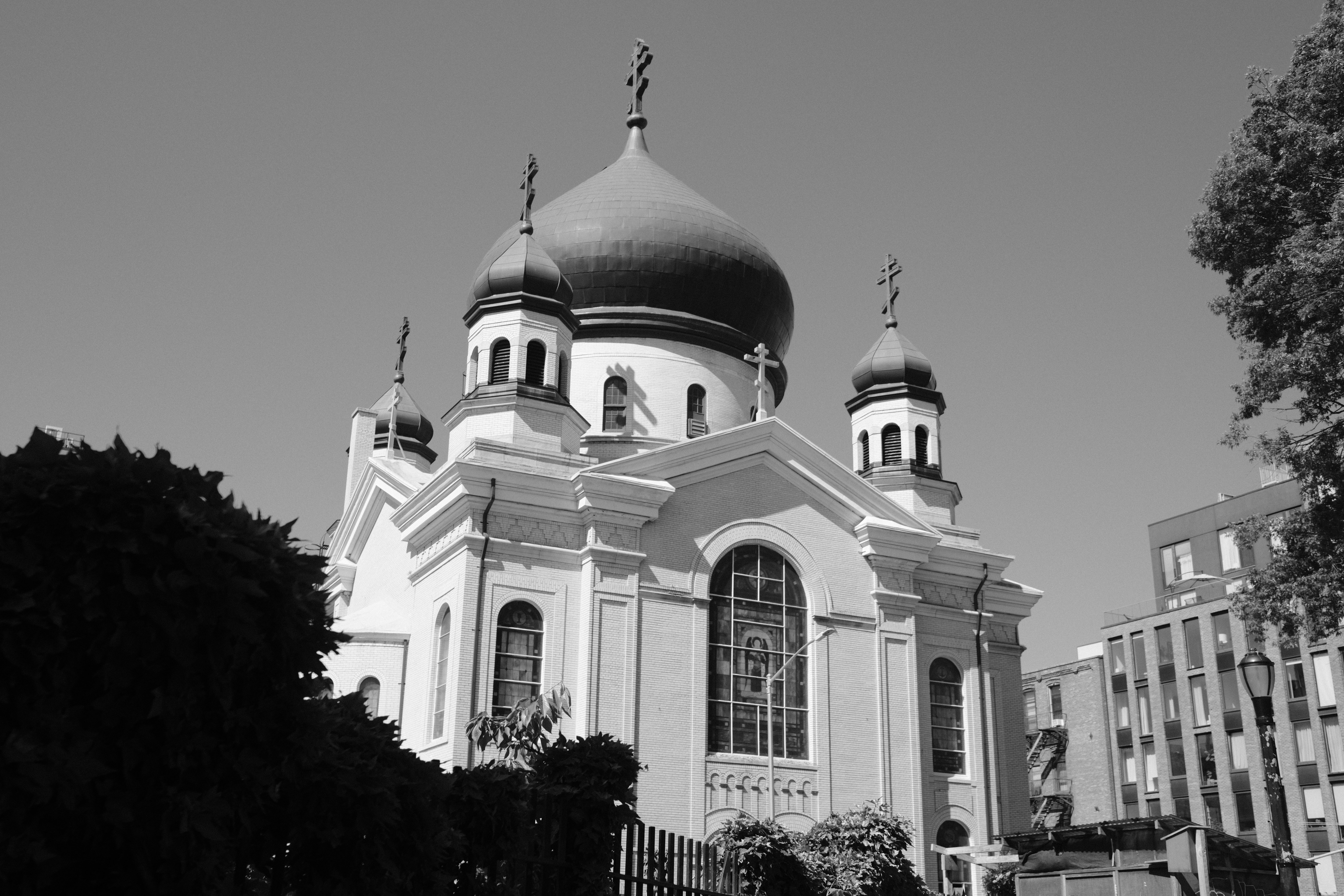
First time in an Orthodox church. I don’t prescribe to any one denomination, but I am church curious. I have friends and family that are Catholic, some Protestant, some go to those non-denom churches. I’ve stumbled into many types of churches over the years. This one intrigued me. Byzantine styled architecture with the yellow bricks, and oxidized dome overlooking the park. I go from surrounded by hip millennials and zoomers walking their dogs, pushing strollers in the park to a room of Slavic men, women and children filling the pews. A portal into the old world in this otherwise thick veiled neighborhood.
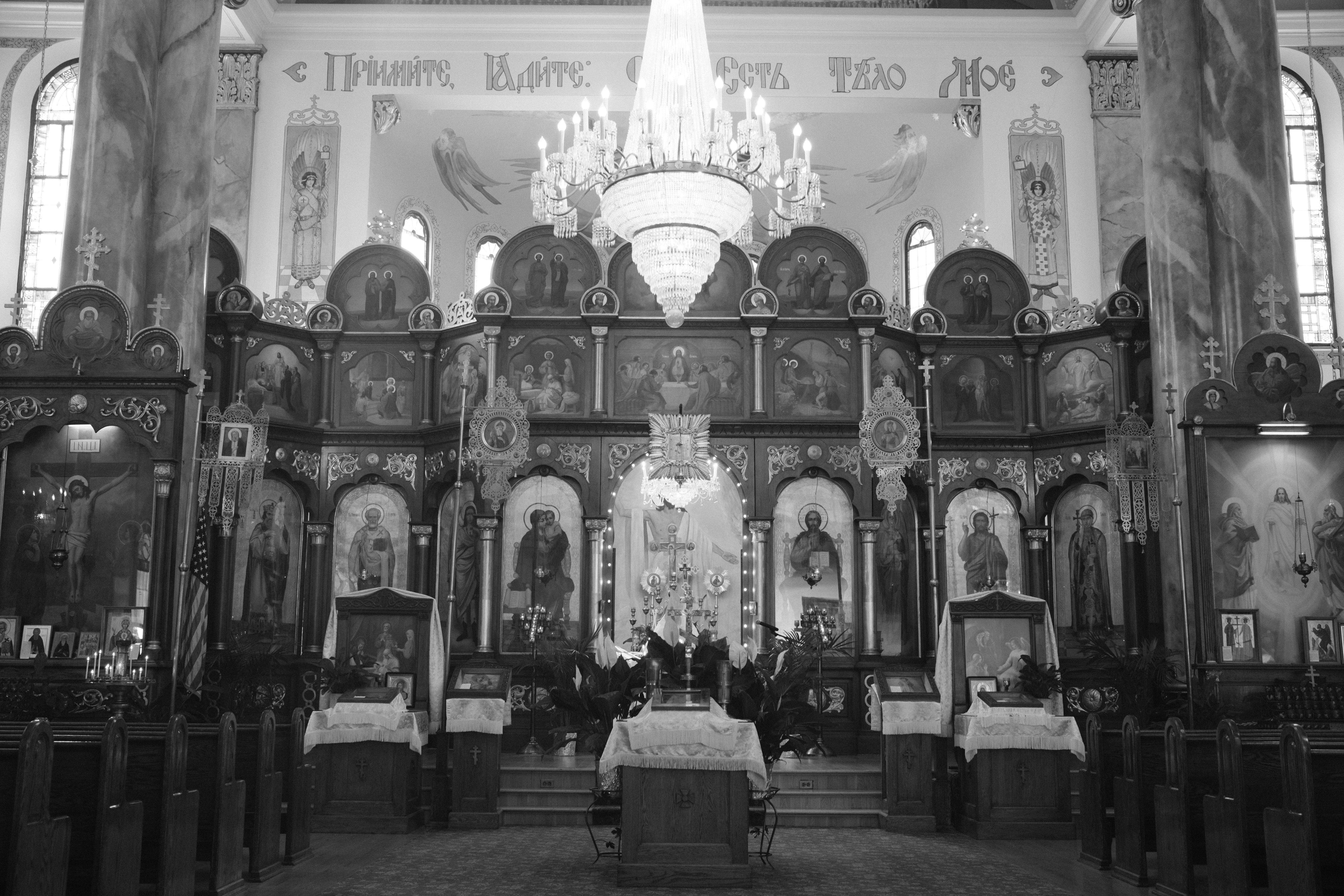
The priest spoke an unknown Slavic language, burned incense, the choir chanted old world hymns, the people lighting candles and kissing the icons around the room. The atmosphere was heavy, dreamlike. Felt like drifting through a Tarkovsky film. It moved slow, felt mystical, mysterious even.
When the nearly two hour service was over I left with many questions about the strange but otherwise pleasant experience. Walking out I did what anyone does now to process the unknown, turning to the silicon demigods. I asked Claude what the deal is with Orthodox services. I thought the whole ritual stuff was a little archaic but found out that is on purpose. The Divine Liturgy is intentionally ancient, preserving the forms, prayers, and theology of the earliest centuries of Christianity. The hymns were in Church Slavonic, which comparable to Latin is not widely spoken. So I wasn’t the only one that didn’t understand what was said. Instead we were there for the vibes I guess.
Also learned that the word Orthodox is another word for “trad.” The rituals felt very trad compared to the non-denom services that practically put on a concert with a rock band and strobe lights. I left that service with another feeling than it just being archaic, but that mysteries are good. The priest entering and leaving the room, speaking behind beautiful golden doors, the attendees standing and sitting as the doors of the iconostasis open and close separating the earthly and heavenly realms. It was a lot to take in, but the visualization was intriguing and left me wondering about the mysteries of the church as an institution, place to worship, and how it is still relevant over a thousand years later.
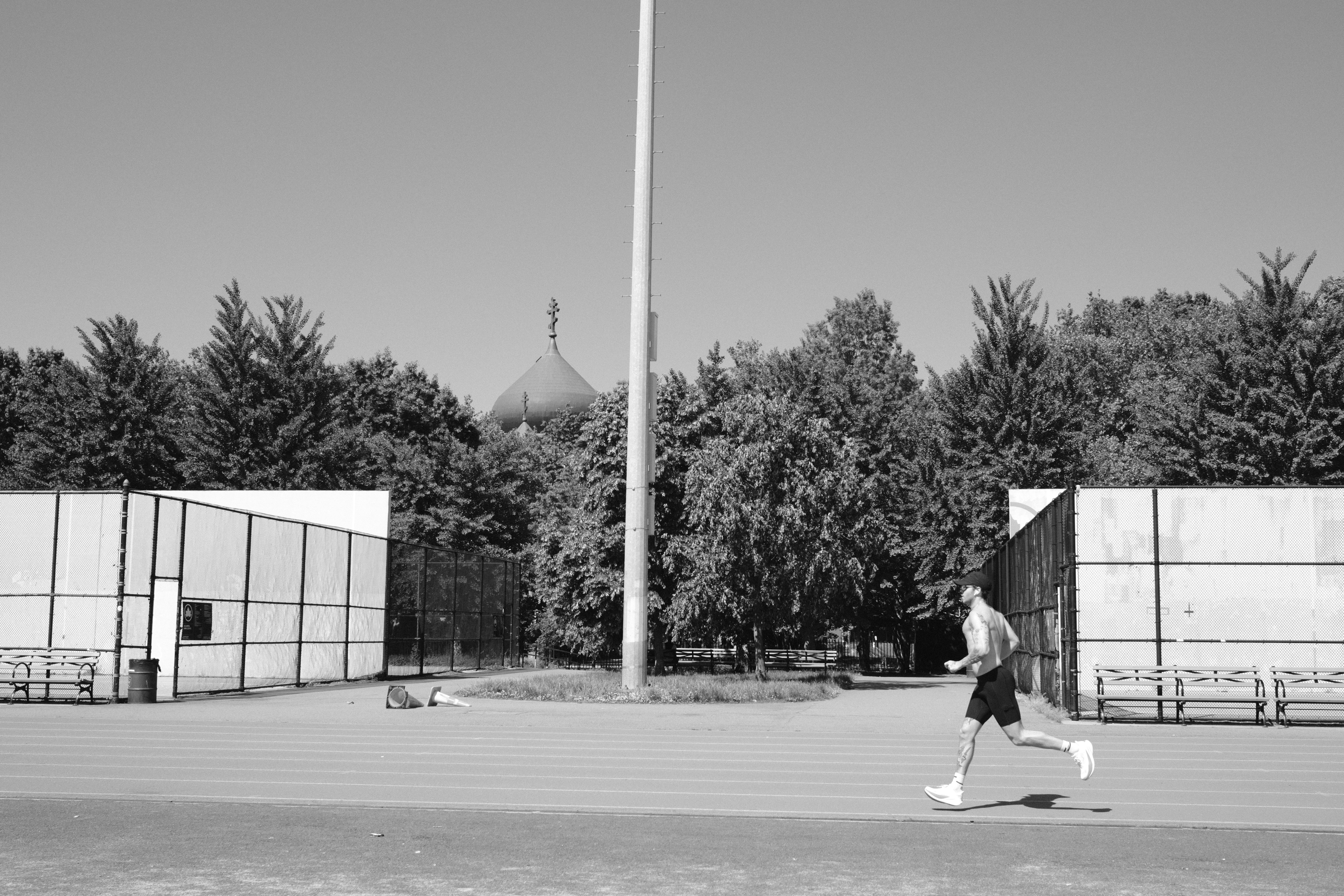
Now walking around the McCarren Park track I felt an intense contrasting energy. I saw men and women in their 20s and 30s running and exercising around the track and outdoor gym. Everyone looked fit and healthy. Many likely counting their calories, smart watch tracking their steps, sleep, heart rate. Nothing is left for question in our hyper-connected world. Someday with the help of technology, nothing about the human body will be a mystery. We will have the ability to research, monitor and act on the constant data that we are generating.
The quantified self movement is positive for living a healthier life, but it also turns us spiritually sterile. Human contradictions are more fun. The guy smoking a blunt while doing muscle ups had a much stronger aura than the human cyborgs rushing to get their workout in before their intermittent fasting window starts, or checking their heart rate on their Apple Watch every lap instead of just running just to run. But humans are funny like that. We’re attracted to contradictions, unique characteristics and personalities.
I’ve recently been thinking that the antichrist may not be a person, but the conglomeration of all available technology into an all encompassing intelligence. This is how we become a part of the machine. We track all of our health metrics, we overthink each and every interaction, we reach for more information, more intelligence, more stimulus. Nothing left for mystery is the real antichrist.
Our ape brains aren’t ready for this constant intake of information. It challenges our natural ways of working through problems, natural ways of socializing and learning about our mind and body through trial and error. I try to keep this in mind when I am out socializing or even in my work with software. I don’t need to understand each and every bit of code I am deploying. I recently built two websites and am working on another app currently. Can I hardcode HTML, CSS, Javascript? No. I don’t need to. Claude handles the hard part. I can use natural language, Claude compiles, and I can do a little tweaking but it otherwise creates the vision I describe. Another project I am working on is complicated under the hood. The work that would require a team of programmers and data scientists, I am spinning out on my own. It’s not perfect, but I am making progress. The terminal is my interface between the human world and the world of bits. I don’t ask further questions.
AI coding assistants are dramatically changing how the web is interacted with and built. We use the web every day and don’t overthink about how each website and computer works down to the bits. Now we can build apps without thinking about coding languages. This is the tower of Babel for wordcels. Before, liberal arts creatives wouldn’t be caught dead building an app and now they can use what they know well, the English language, to speak into AI and create new online experiences never before possible.
Getting back to the meaning of the term Orthodox, I predict there will also be traditionalists that write code with little AI assistance. For some applications that is absolutely necessary. The AI assistants aren’t perfect, and it helps to understand how something is built. When fewer people learn how to code, the Orthodox programmers will have a certain value that computers cannot replace.
I like to think about how the Japanese basically saved the craft of denim making. When the US manufacturers sold out to globalization quality went down and Japan was going through a major denim craze and wanted the high quality US denim. Small craftsmen literally bought the old looms from US mills and brought them back to Japan to perfect the craft of denim clothing the way the US once did. Now people associate Japan with the highest quality denim. This is what may happen to the programming industry. When the rest of us sell out to the computers to make our slop apps, some craftsman who held onto their programming skills will be of huge value. Products built solely with AI lack a soul and people see right through the sloppy UX and generic designs. The craftsmen that put their creative touch into the apps they design and build will be the ones that stand out in this next era of programming.
As the subpar programmer that I am, I’m still glad to be able to spin up apps in half the time without having to take coding courses, watch YouTube tutorials or get ridiculed on coding forums. I also think awareness of the limitations of AI for coding is key. I would never outsource my critical thinking, writing and designing completely to AI. The imperfections of my work are what make it mine. The same way I know when I sit in those church pews and look around at all of the 2D icons, I know there are limitations in subscribing to that whole experience. I took it in for what it is, but that room, those rituals and teachings don’t answer all of my questions. Neither the church nor our silicon demigods have all of the answers that we search for.